Gravel Driveways in Nottingham
Gravel driveways in Nottingham — proper sub-base, membrane, edge restraints, and stabilising grids to stop migration. Free-draining, great value.
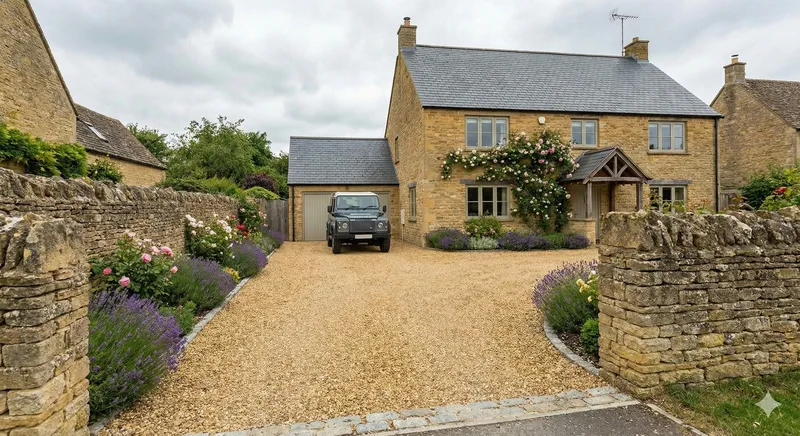
Expert Gravel Driveways Services
Gravel is the most economical proper driveway surface, and it has real advantages beyond cost: it's naturally free-draining (so it usually sidesteps the planning rules that catch solid drives), it's quick to install, it deters intruders (you can't approach a gravel drive quietly), and a fresh gravel drive looks crisp and suits period and rural properties beautifully. We install gravel driveways across Nottingham and Nottinghamshire — done properly so the gravel stays put and the drive stays firm, not the loose, rutted, weed-filled spread that a cheap gravel job becomes.
The difference is all in the build. K.A.B Fencing excavates, lays and compacts a stone sub-base, fits a weed-suppressing membrane, installs solid edge restraints to contain the gravel, and — where migration or rutting is a concern — lays a gravel stabilisation grid (a honeycomb panel that locks the gravel in place underfoot and under tyres) before topping with your chosen decorative gravel. That's what turns gravel from a surface that scatters onto the lawn and ruts into tracks into one that stays even, firm, and tidy. Quoted in writing after a free site visit.
Why Choose Our Gravel Driveways?
Premium Materials
Top-quality paving products
Expert Installation
Skilled craftsmen with 20+ years experience
Proper Drainage
SUDS compliant installations
10 Year Guarantee
Long-term peace of mind
Why gravel is such good value — and free-draining
Gravel is the lowest-cost way to surface a driveway properly, which makes it ideal for larger drives and tighter budgets. It's also permeable by nature — rainwater drains straight through it into the ground — so a gravel drive usually avoids the planning permission that a new impermeable front driveway over five square metres draining to the road would otherwise need. That free drainage also means no puddles and less surface water running towards the house or road. For value plus drainage, gravel is hard to beat.
Stopping the two classic gravel problems: migration and ruts
Cheap gravel drives go wrong in two predictable ways: the gravel migrates (scatters onto the lawn and road, and you're forever raking and topping up) and it ruts (tyres push channels into loose gravel over a soft base). Both are preventable. Solid edge restraints contain the gravel at the sides. A proper compacted sub-base stops rutting from below. And a gravel stabilisation grid — interlocking honeycomb panels filled with gravel — locks the stones in place so they don't scatter or rut even under regular car use, while still looking like a normal gravel drive. We build in whichever of these the drive needs so it stays put.
Gravel choices and edging
Decorative gravel comes in a range of colours, sizes, and stone types — golden gravels, slate greys, buff and flint blends, self-binding gravels that knit together more firmly. Smaller, angular gravels lock together better underfoot than large rounded stones (which roll and scatter more), so the choice affects how the drive behaves as well as how it looks. We edge the drive cleanly — block, brick, kerb, timber, or steel edging — both to contain the gravel and to finish it neatly against the lawn, beds, or path. We'll bring options to suit the property.
Gravel vs block paving vs tarmac
Honest comparison: gravel is the cheapest, free-draining, quick, and characterful, but it needs occasional topping-up and raking and isn't as smooth to wheel a bin or pram over as a solid surface (a stabilisation grid helps a lot). Block paving costs more but gives a smooth, premium, repairable, patterned surface. Tarmac sits in between on cost with a smooth seamless finish. We install all three, so we'll match the surface to your budget, how the drive's used, the look, and the drainage situation rather than pushing one option.
Why Nottingham customers choose K.A.B for gravel driveways
We're a Nottingham-registered limited company trading from Chris Allsop Industrial Park in Colwick, with over 140 five-star reviews on Google. Owner-led — Kye runs every job. Free no-obligation quotes, fixed prices in writing before work starts, all work guaranteed. We build gravel driveways with proper sub-bases, membranes, edge restraints, and stabilising grids across Nottingham and Nottinghamshire — so the gravel stays where it's put. Ring us for a site visit and a quote.
Request a Quote
Get a free, no-obligation quote for your gravel driveways project.
Get Quote Call NowAreas We Cover
View All Areas →Frequently asked questions
Do gravel driveways need planning permission?
How do I stop gravel spreading everywhere?
Will a gravel driveway get muddy or rutted?
Is gravel cheaper than block paving or tarmac?
What gravel is best for a driveway?
Do you install gravel driveways across Nottinghamshire?
Related Paving Services

Tarmac Driveways
Tarmac driveways in Nottingham — fully prepared sub-base, edge restraints, drainage, and a clean machine-laid finish. Free quotes.
Learn More
Concrete Driveways
Concrete driveways in Nottingham — reinforced, long-lasting drives with brushed, patterned, or printed finishes, on a proper sub-base with drainage. Free quotes.
Learn More
Block Paving
Block paving in Nottingham — driveways, patios, and paths on a full sub-base with edge restraints, in a choice of block, colour, and pattern.
Learn MoreReady to Transform Your Driveway or Patio?
Contact us today for a free consultation and quote. We serve Nottingham and all surrounding areas.