Fence Post Replacement & Repair in Nottingham
Fence post replacement across Nottinghamshire — rotted, snapped, or leaning posts swapped without dropping the whole fence run. Free quote today.

Expert Fence Post Replacement & Repair Services
Fence posts are the single most common point of failure on any boundary fence. The boards weather slowly, the rails take decades to fatigue, but the posts — where the timber meets the soil, or where impact loads concentrate at ground level — are usually the part that gives way first. We see posts fail across Nottingham and Nottinghamshire for the same handful of reasons: softwood timber posts rotting where they enter the ground, concrete posts snapping after a hard knock, posts leaning where ground heave or fence-line tension has pulled them out of true, and posts loosening where the foundation concrete was undersized or never set properly in the first place.
K.A.B Fencing replaces fence posts as a stand-alone repair job — single failed post, multiple posts on the same run, or a full re-post of a length of fence where the original install is reaching end-of-life. Where the panels and rails either side are still serviceable, we do the work without taking the surrounding fence down — keeps the disruption short, preserves what's still good, and brings the cost down compared to a full rebuild. Where the surrounding timber is too far gone to refit cleanly, we'll be straight in the quote and recommend replacement rather than a patch that won't hold.
Why Choose Our Fence Post Replacement & Repair?
Quality Materials
Premium timber and materials built to last
Expert Installation
Skilled craftsmen with years of experience
Competitive Pricing
Fair quotes with no hidden costs
Guaranteed Work
Full warranty on all installations
When to replace, repair, or spur a fence post
Not every failing fence post needs replacing outright. The right intervention depends on what's actually wrong: rot at the ground line, snap across the post body, lean from foundation heave, or split from impact. A timber post rotted at the base but sound above ground can often be saved with a concrete spur — a short concrete post set into a fresh footing alongside, bolted through to the old timber to take over the structural job. A concrete post snapped clean across needs full replacement; you can't splice concrete reliably. A leaning post with sound timber and a deteriorated foundation can sometimes be reset by digging out and re-concreting in place, no new post required. The first thing we do on every job is look closely at the post — and the foundation around it — before deciding which approach makes sense.
Why fence posts fail in Nottinghamshire conditions
Notts soil is a varied mix — clay-heavy across much of the Trent corridor, sandier as you move north towards Sherwood Forest, with patches of Mercia mudstone and made-ground in between. Each behaves differently around a fence post. Clay holds water against the base of timber posts, accelerating rot at the ground line; it also expands and contracts with the seasons, which can heave a post out of vertical over a few winters. Sandy ground drains faster but offers less lateral support, so posts in sandy footings tend to loosen under wind load before they rot. Add in the typical British rainfall pattern — wet winters, periodic summer storms — and a post that wasn't set properly from day one is often the first thing to fail on a fence that's otherwise fine.
Concrete versus timber posts — choosing the right replacement
A post replacement is a chance to upgrade. The single biggest factor in long-term fence life is post material. Pressure-treated timber posts to UC4 grade are still the right choice on some installs — period properties where the look matters, light-duty fences, sites where matching the existing run matters more than longevity. But for most boundary fencing where fence-and-forget life is the priority, concrete posts win on lifespan. They don't rot at the ground line, they don't split when struck, and they hold their alignment for decades. The cost premium per post is modest; the lifespan difference is substantial. We'll quote either, and we'll be clear about the trade-off in writing before you decide.
Replacing a post without taking the fence down
On most domestic feather-edge, closeboard, and panel fences we can lift the failed post, dig out the old foundation, set a new post in fresh concrete, and refit the rails and boards without dropping the panels either side. The trick is in the order of operations — supporting the existing run with a temporary brace while the old post is removed, getting the new post plumb and at the right height before the concrete cures, and making sure the rails meet the new post cleanly at the original spacing. Panel fences (lap, overlap, prefab) are the simplest because the panel just slides out and back in; bespoke closeboard runs need slightly more care to refit the feather-edge boards cleanly. Either way, a single-post job on an accessible boundary is usually a same-day or next-day job.
Foundation depth and the concrete that holds it
A fence post is only as good as the foundation it sits in. Industry standard for a 1.8m (6ft) domestic fence is roughly a third of the total post length set into the ground — so a 2.4m post (1.8m above ground, 600mm below) ends up with 600mm of buried length set in a concrete haunch. End posts, corner posts, and gateposts go deeper and wider. Exposed sites or heavy clay grounds get a wider concrete collar to spread the lateral load. Post-mix concrete is the standard fix on domestic work; for larger gateposts or commercial-scale runs we'll mix sharp-sand-and-ballast on site for a properly structural setting. Skimping on the foundation is the most common reason a brand-new fence fails inside five years — and the most common thing we have to put right when called to repair a recent install done by someone else.
UC4 treatment, galvanised fixings, and why spec matters
Every timber component we use on a fence post replacement is UC4 grade — the use-class rated for in-ground or near-ground contact. That means copper-based preservative vacuum-pressure impregnated into kiln-dried timber, not the wet green softwood that surface-treats and rots from the inside out. The fixings matter just as much: galvanised through-bolts, hot-dipped galvanised brackets, stainless or galvanised screws for the rails and boards. Bright-zinc fixings rust within months in a damp boundary environment and stain the surrounding timber; cheap nails pull out as the boards move. We use the same spec for repairs as we do for new installs — there's no point putting a new post in if the metalwork around it is going to fail first.
Leaning, twisted, or loose posts — straightening versus replacing
A leaning post isn't always a failed post. Sometimes the timber is sound and the foundation has shifted — ground heave from a wet winter, a tree root extending under the line, a vehicle clipping the post-top — and the right repair is to excavate the footing, plumb the post, and re-concrete in place. Other times the post body itself has twisted, split, or rotated and the structural integrity is gone; a re-set won't hold and the post needs to come out and be replaced. We'll diagnose which it is at the site visit. As a rough rule: a leaning post that's still rigid when you push it is usually a foundation problem; a leaning post that moves when you push it has lost its structural connection and is a replacement job.
DIY pitfalls we get called to fix
Fence post replacement looks like a weekend job until you're in it. The common DIY mistakes we see across Nottinghamshire: post set too shallow (anything under 450mm for a 1.8m fence will eventually lean); post set with wet concrete poured straight against bare timber, with no air gap or sealant, accelerating rot at the ground line; new post fitted to old rotten rail-ends and the rail then fails inside a year; alignment off by a few degrees, so panels won't slot back in cleanly. None of these are bad calls in isolation — they're just specific to the trade. If you've started a post replacement yourself and hit one of these, give us a ring; we can usually finish the job and put the surrounding components right at the same time.
Sloped, wet, or restricted-access boundaries
Slope, wet ground, restricted access, and proximity to services all complicate post replacement. On a sloped boundary we step the post heights to match the slope rather than running level — the panels drop to suit and the line reads cleanly from a distance. On wet or waterlogged ground we'll often specify a deeper, wider concrete collar to spread the load, and in some cases adjust the concrete mix to set properly in the conditions. Restricted access (narrow side-passages, no rear gate, fence backing onto a building) means materials come through the front and the dig-out is hand-tooled rather than mechanical. We'll flag any of these at the site visit and price accordingly; we don't take on awkward jobs and surprise people with extras after.
Why Nottingham homeowners choose K.A.B — and what it costs
We're a Nottingham-registered limited company trading from Chris Allsop Industrial Park in Colwick, with over 140 five-star reviews on Google. Owner-led — Kye runs every job from quote through to fitting, so the person who measured the post is the one overseeing the replacement. Free no-obligation quotes, fixed prices in writing before work starts, all repairs guaranteed. Cost depends on how many posts are involved, what condition the surrounding timber and concrete are in, and whether anything else needs putting right at the same time — single-post replacement on an accessible boundary is usually a same-day or next-day job; longer multi-post runs scale from there. Site visit usually within a week of enquiry. Install slots run a week or two out for non-urgent post replacements, faster for storm-damage and active fence-down repairs.
Request a Quote
Get a free, no-obligation quote for your fence post replacement & repair project.
Get Quote Call NowAreas We Cover
View All Areas →Frequently asked questions
How much does fence post replacement cost?
Can you replace a single post without taking the whole fence down?
Should I replace with a timber post or upgrade to concrete?
How long will a replacement post last?
My fence post is leaning — can you straighten it instead of replacing?
Do you handle storm-damaged or fence-down emergencies?
How deep should a fence post be set?
Can you replace posts on sloped or wet ground?
Related Fencing Services

Storm-Damaged Fence Repair
Storm-damaged fence repair across Nottinghamshire — fast callout for lifted panels, snapped posts, and flattened runs. Call to make the boundary safe.
Learn More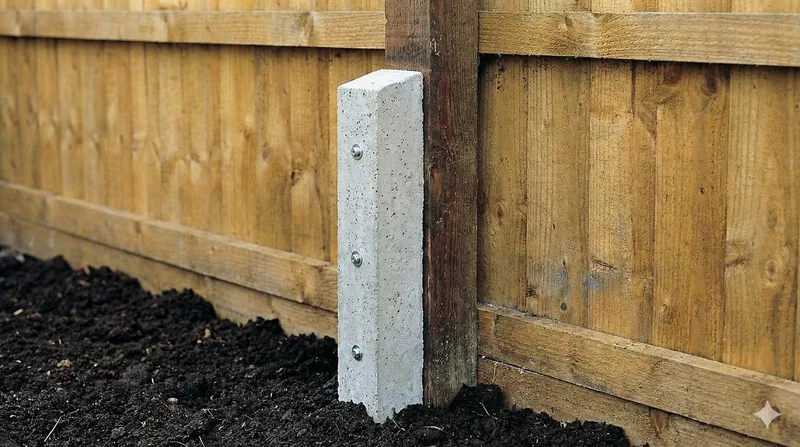
Concrete Post Spur Repair
Concrete post spur repair across Nottinghamshire — bolt a reinforcing spur to a snapped or cracked concrete post without taking the panels down. Free quote.
Learn More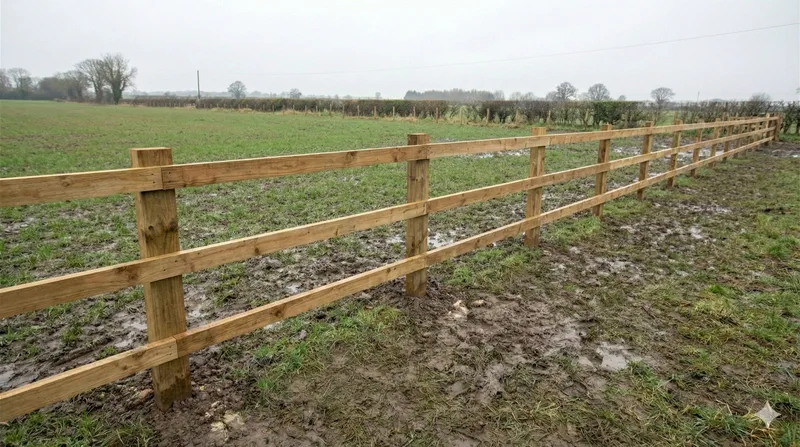
Heavy-Duty Post & Rail Fencing
Heavy-duty post and rail fencing across Nottinghamshire for paddocks, smallholdings and commercial perimeters. 2, 3, and 4-rail. Get a free quote today.
Learn MoreReady to Start Your Project?
Contact us today for a free consultation and quote. We serve Nottingham and all surrounding areas.